Yes — Doylestown Hauling Co. removes old washers and dryers, including gas dryers, from homes across Doylestown and the surrounding Bucks County area. The detail that trips most people up: a gas dryer needs its gas line shut off and capped before anyone touches the appliance. That one step changes how you prep, who shows up, and how the appointment gets scheduled.
A few things worth knowing before you book:
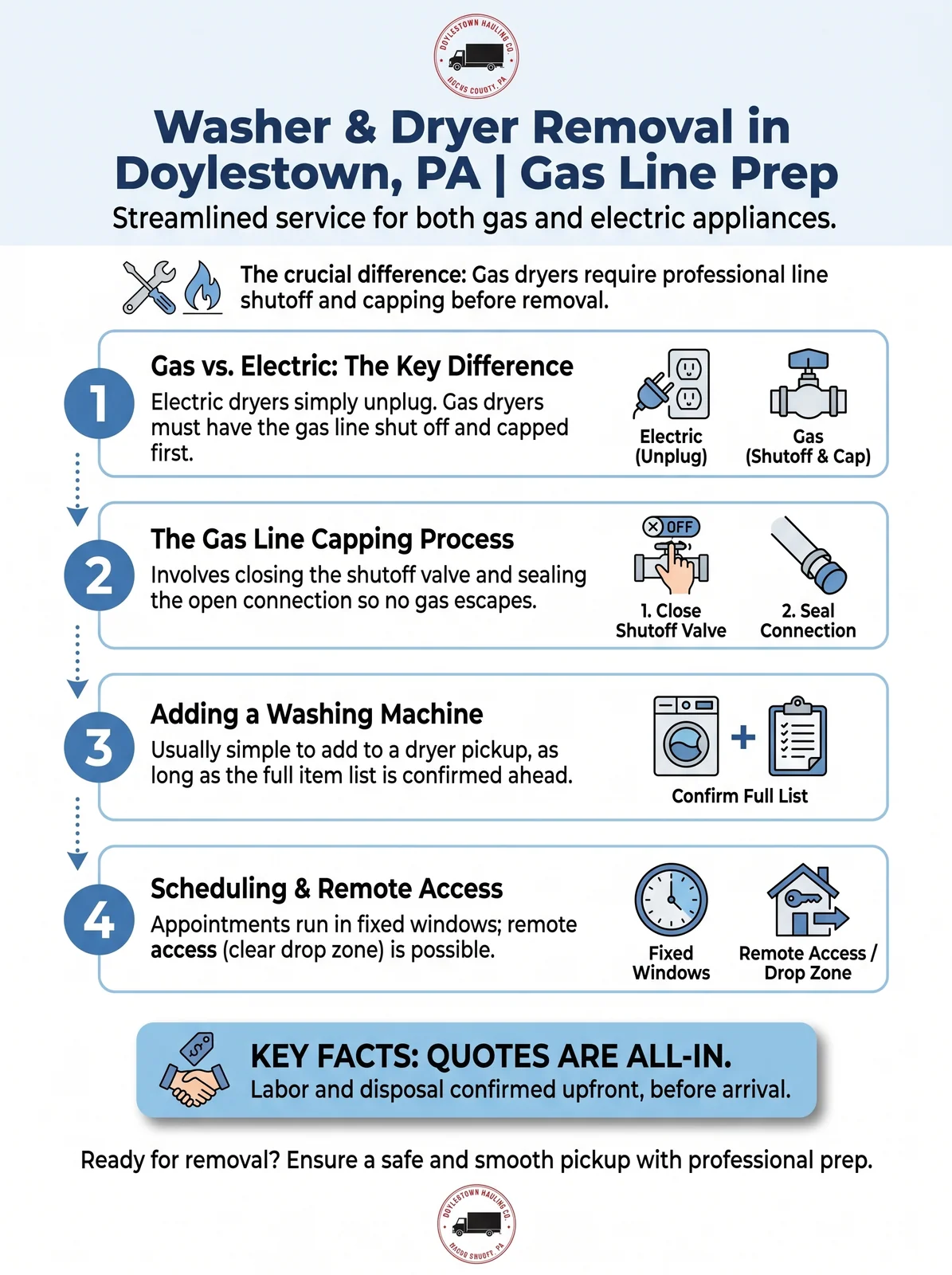
- Gas dryers require a shutoff and cap on the gas line — electric dryers don’t.
- Adding a washing machine to an existing dryer pickup is usually simple, as long as the full item list is confirmed ahead of time.
- Appointments run in fixed windows, and same-day service isn’t always available.
- Someone doesn’t have to be home in person — access can be arranged through another person or a clear drop zone.
- Quotes are all-in, covering labor and disposal, confirmed upfront before the truck shows up.
Can You Remove a Gas Dryer, or Just an Electric One?
Both are removable. The difference is in what has to happen first.
An electric dryer unplugs from a standard outlet, and once it’s unplugged, it’s ready to go. A gas dryer connects to a gas supply line through a shutoff valve and a flexible connector, and that line has to be turned off and sealed before the appliance gets pulled away from the wall.
Gas line capping is the process of closing the shutoff valve and sealing the open connection point so no gas escapes once the flex line is removed. It happens before the dryer is disconnected, not after — and it’s a safety step, not something to skip to save ten minutes.
In practice, that’s the exact scenario behind a lot of gas dryer pickup calls: the line needs attention before the appliance can move anywhere.
Who Handles Disconnecting and Capping the Gas Line?
In most households, the actual gas cap is work for a licensed plumber or HVAC technician — not a hauling crew. Once the line is shut off and sealed, the appliance itself is ready for pickup, and that’s where Doylestown Hauling Co. takes over.
If you’re not sure who’s supposed to do that step, ask when you book. It’s a quick question, and it avoids a wasted trip where a crew shows up to a dryer still hooked to a live gas line.
Worth saying plainly: don’t attempt a gas line disconnect yourself unless you’re trained for it. A loose cap or a missed shutoff isn’t a small mistake.
What if the gas line was already capped before we arrive?
That’s the easiest version of this job. If a plumber already shut off and capped the line, the crew just needs clear access to the appliance — no waiting, no extra coordination required on pickup day.
Getting the Appliance Ready Before the Crew Arrives
A little prep on your end keeps the appointment quick and keeps the crew from wasting your time window standing around. Most of it takes fifteen minutes.
Before pickup day, take a few minutes to:
If you’ve got to be at the house anyway for the plumber or for another reason, it’s worth timing that visit to overlap with the pickup window. One trip instead of two.
Can You Get the Washer and Dryer Picked Up in the Same Trip?
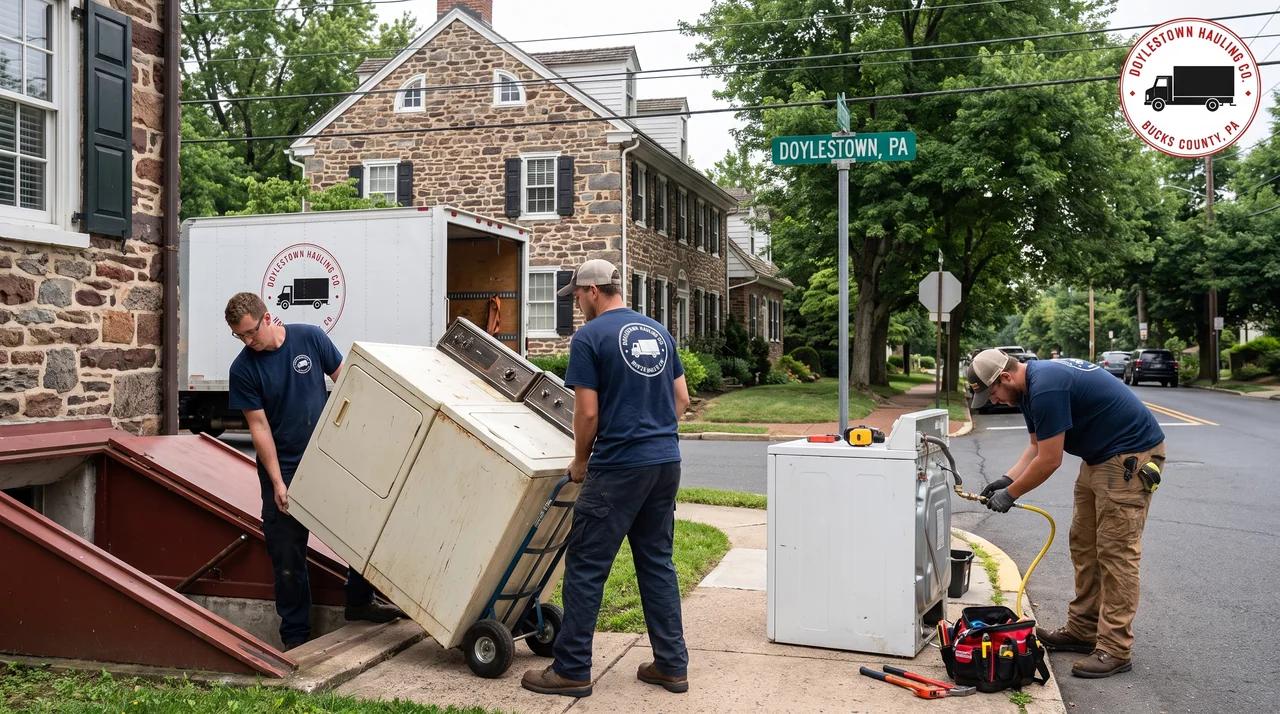
Yes. Adding a washing machine to a dryer pickup is common, and in most cases it’s a simple add-on rather than a separate appointment.
This comes up on booking calls all the time — someone schedules a dryer pickup, then realizes the washer is heading out the door too. The answer is nearly always the same: add it to the same visit, and just make sure the full item list gets confirmed before the crew heads out, so the truck and the team show up ready for both appliances instead of one.
Why Bundling Appliances Saves You a Second Visit
One appointment, one arrival window, one disruption to your morning. That’s the whole case for bundling.
- Fewer arrival windows to work around, which matters if you’re juggling work or a move-out date.
- One crew visit instead of two means less time spent waiting at home.
- Loading multiple appliances together is more efficient for the crew, which keeps scheduling tighter for everyone.
- It’s simpler to track one all-in quote than two separate ones.
If you’re already swapping an old laundry pair for new ones, it’s worth asking whether other items can ride along too. A single visit for a whole garage or basement clear-out tends to make more sense than spacing jobs out over weeks.
How Appliance Pickup Scheduling Actually Works
Appointments run in set windows rather than an all-day \”sometime Tuesday\” promise. A typical day includes a 9–10 a.m. slot, an 11–12 slot, and a 1–2 p.m. slot.
Same-day pickup is sometimes possible, but it depends entirely on how booked the day already is. On a fully booked day, the next available slot is usually first thing the following morning — a 9–10 a.m. window is the common fallback, and for a lot of homeowners, getting it done early works out fine anyway.
- Call and describe the appliances, including whether a dryer is gas or electric.
- Pick a time window that fits your schedule — morning tends to fill first.
- Confirm the address, spelling, and contact details out loud before you hang up.
- Wait for the appointment to be confirmed back to you — a booking isn’t locked in until that happens.
That last step matters more than people expect. A time window that’s merely \”offered\” isn’t the same as one that’s confirmed. If you’re not sure your appointment is locked in, call back and ask directly.
What to Expect on Pickup Day
The crew calls before they arrive. That’s the standard protocol — a heads-up call ahead of the truck pulling up, not a knock out of nowhere during dinner.
From there, it’s straightforward: confirm access, carry the appliances out, and leave the space swept and clear. No boot prints down the hallway, no debris left behind.
What If You Can’t Be Home for the Pickup
Plenty of people can’t block out a window during a workday. That’s fine. Authorizing someone else — a neighbor, a family member, a contractor already on-site — covers it, as long as they know the appliances and the arrangement in advance.
Another option: stage the appliances somewhere accessible, like a garage or driveway, and confirm access details when you book. Either way, say so upfront. A crew showing up to a locked house with nobody to call is the one scenario worth avoiding.
What Does Washer and Dryer Removal Cost in Bucks County?
Pricing for appliance pickup is typically based on three things: how many items, how big and heavy they are, and how hard they are to access. A washer and dryer sitting in a first-floor laundry room costs less to move than the same pair stuck in a third-floor walk-up.
A fair quote is an all-in quote — labor and disposal rolled into one number, given upfront before the work starts. No separate \”hauling fee\” that shows up after the truck is loaded.
One line item to ask about specifically: if a licensed plumber needs to cap the gas line, that’s typically billed separately from the appliance pickup itself, since it’s a different trade doing different work. Ask for both numbers before pickup day so there’s nothing to untangle afterward.
| Factor | How It Affects the Quote |
|---|---|
| Number of appliances | A washer and dryer together is more efficient than two separate visits |
| Access and location | Basements, upper floors, or tight hallways can affect the quote |
| Gas line capping | Usually handled and billed separately by a licensed plumber or technician |
| Disposal method | Included in the all-in price — no separate dump fee added later |
What if the washer and dryer are in a basement or up a flight of stairs?
Tell the dispatcher when you book. Stairs and tight basement doorways affect how long the job takes and sometimes the quote, so it’s better to flag it upfront than to have the crew discover it on arrival.
We won’t tell you we’re the cheapest option in Bucks County, because that’s not the pitch. The pitch is a number you can trust before the truck ever leaves the yard.
Where Do Old Washers and Dryers Actually Go?
Most old appliances aren’t headed straight for a landfill. Washers and dryers are mostly metal, and metal gets recycled — steel, copper wiring, and aluminum components all have value once an appliance is broken down.
A unit that still runs is a different story. Working appliances are often good candidates for donation rather than scrap, which keeps them in use a few more years instead of getting stripped for parts.
The order of operations is donate first, recycle second, landfill last. Simple rule. The right one.
Getting Your Washer and Dryer Hauled Away in Doylestown
If you’ve got a gas dryer to disconnect, a washer to add to the job, or both sitting in the garage waiting for a decision, the scheduling part doesn’t have to be complicated. Call, describe what’s leaving the house, and pick a window that works.
Doylestown Hauling Co. covers Doylestown and the rest of Bucks County — New Hope, Buckingham, Warrington, Chalfont, and the towns in between. Ask for Mike when you call, and he’ll walk through what needs to happen before the crew shows up, gas line included.
Ready to get the washer and dryer out of the house? Call +1 (215) 709-6020 — answered 24/7 — to book a pickup window and confirm what needs to happen with the gas line before the crew arrives.
Frequently Asked Questions
Do I need to cap the gas line before you take my gas dryer?
Yes. The gas line needs to be shut off and sealed before the dryer is disconnected and moved. In most cases that’s a licensed plumber’s job, and the appliance is ready for pickup once it’s done. Confirm who’s handling that step when you book, so nothing gets delayed on the day of pickup.
Can I add a washing machine to a dryer pickup that’s already scheduled?
Usually, yes. Adding a second appliance to an existing appointment is common and straightforward — just confirm the updated item list ahead of time so the crew and truck are prepared for both.
Can you come the same day?
Sometimes, but not always. Same-day availability depends on how full the schedule already is. On a busy day, the next opening is often the following morning, with a 9–10 a.m. window being a typical first slot.
Does someone need to be home when the crew arrives?
Not necessarily. You can authorize someone else to provide access, or arrange for the appliances to be staged somewhere accessible. The crew calls ahead before arriving, so there’s a heads-up either way.
Do you recycle or donate old appliances?
Yes. Working units are considered for donation first, and the rest are recycled for metal content where possible. Landfill is the last option, not the default.
What’s included in the price?
An all-in quote covers labor and disposal, confirmed before the work starts. If a plumber needs to cap a gas line separately, that’s typically a separate cost from the appliance pickup itself — ask for both figures upfront.